
Basement Remodeling in West Valley City, UT
Turn your basement into a dedicated movie and media room built around how you actually watch. Our basement home theater finishing service covers layout, wiring, soundproofing, and seating for West Valley City homeowners.
What Is Basement Home Theater Finishing?
Basement home theater finishing converts basement space into a dedicated room for watching movies, sports, or gaming. This typically includes framing, soundproofing, low-voltage wiring, lighting control, and seating built around your screen and equipment.
A home theater can be a fully enclosed dedicated room or a more open media area within a larger basement layout.
Basement rooms are naturally suited to home theaters since they already limit outside light and sound compared to above-grade rooms.
Basement Home Theater Services in West Valley City
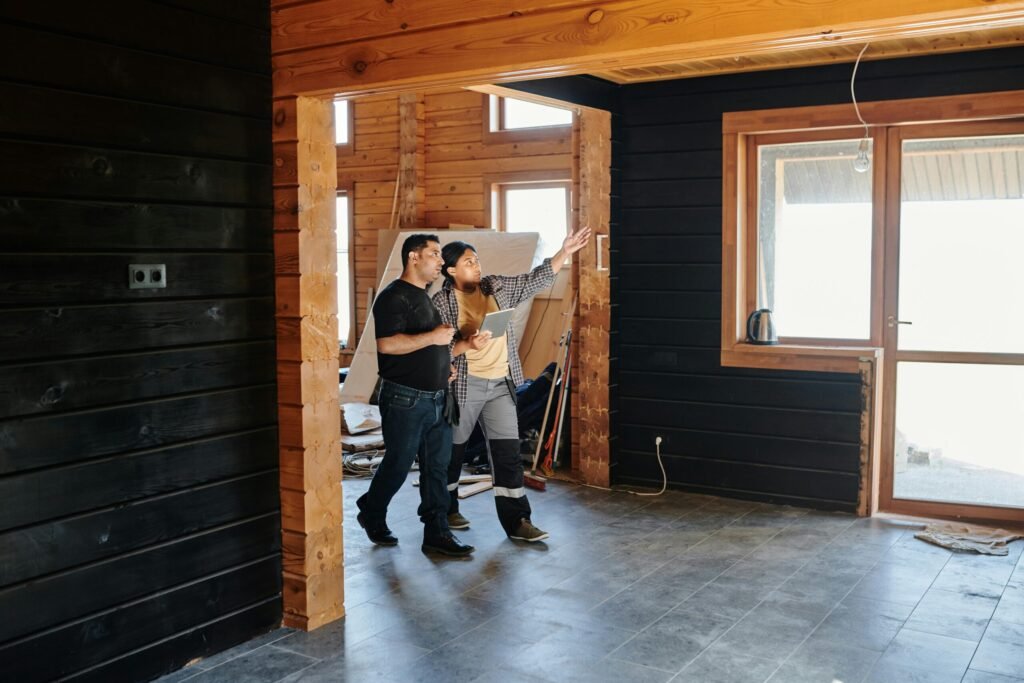
Theater Layout & Screen Placement Planning
We plan the room around screen size, viewing distance, and seating position before any construction begins. This step also determines where equipment, wiring, and speakers will be located.
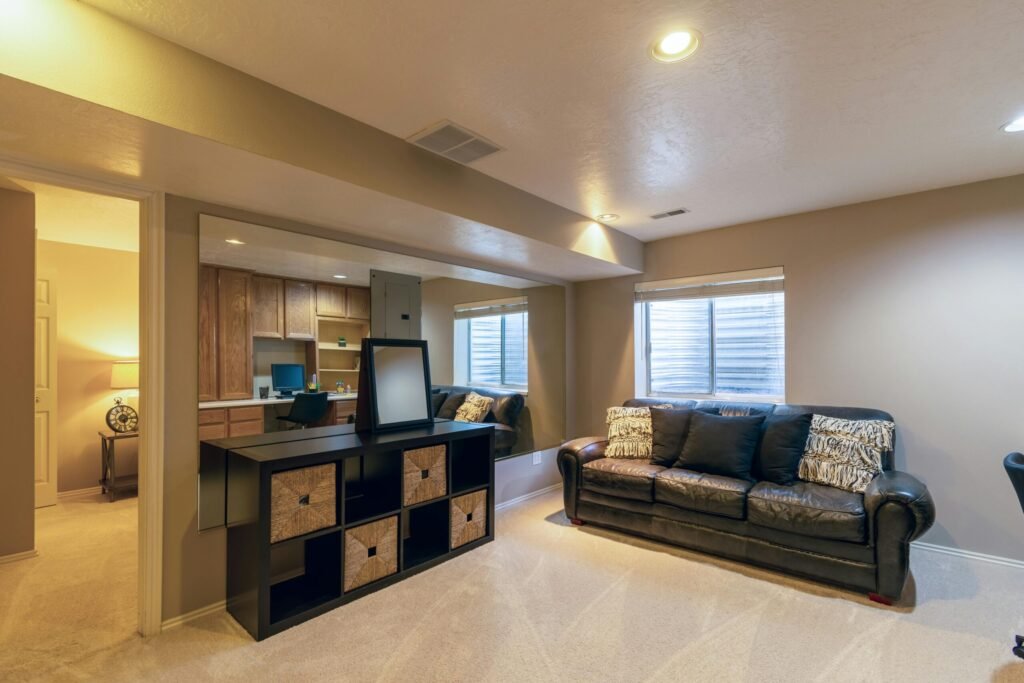
Framing & Soundproofing
Interior walls are framed with sound-dampening insulation and, where needed, resilient channel or double-layer drywall to reduce sound transfer to the rest of the house. This step matters most in basements shared with a bedroom or living space nearby.
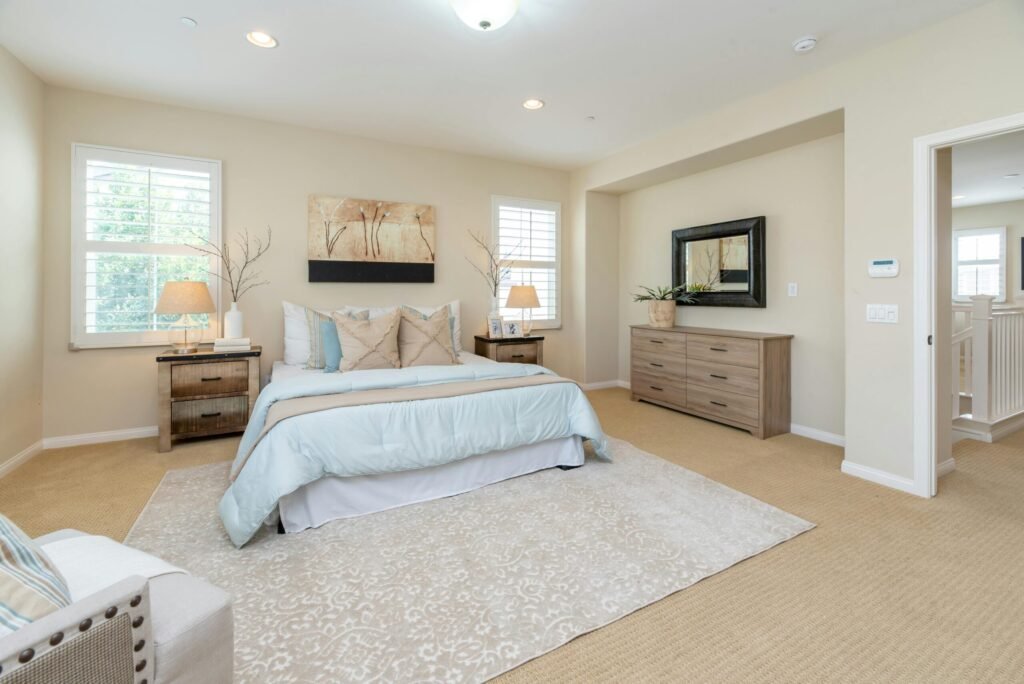
Home Theater Electrical & Low-Voltage Wiring
This covers outlets for equipment, dimmable lighting circuits, and low-voltage wiring for speakers, a projector, and streaming or gaming equipment. Wiring is planned before drywall goes up to keep cable runs clean and accessible.
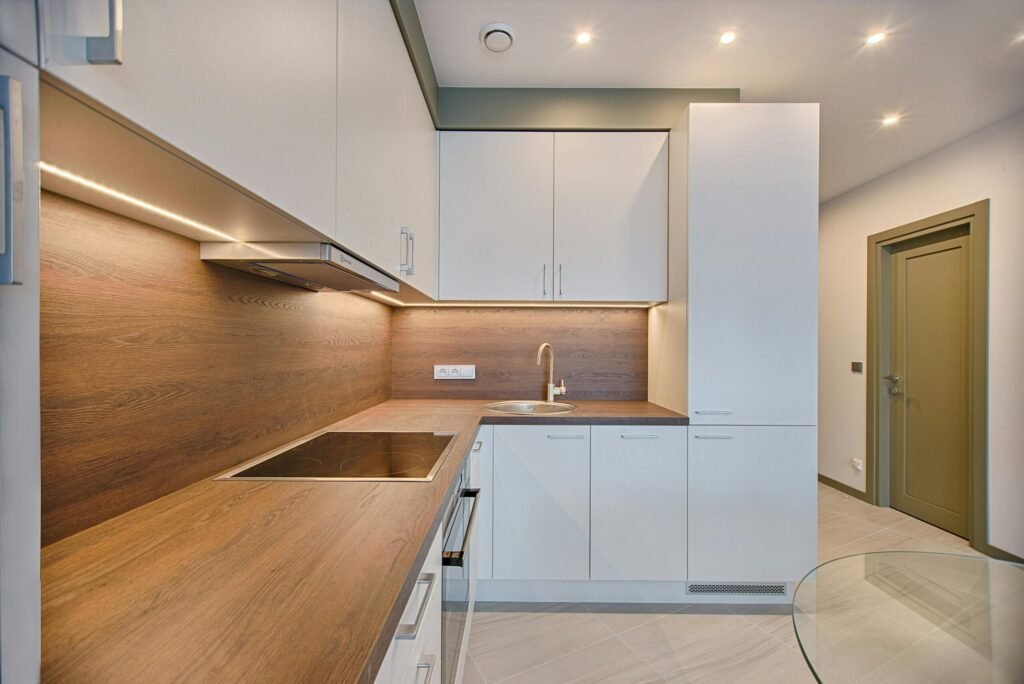
Projector/TV & Screen Installation
Depending on your layout and lighting control, we install either a projector and screen or a large-format TV, along with the mounting and cable management to support it. Screen size and placement are matched to the room’s dimensions and seating distance.
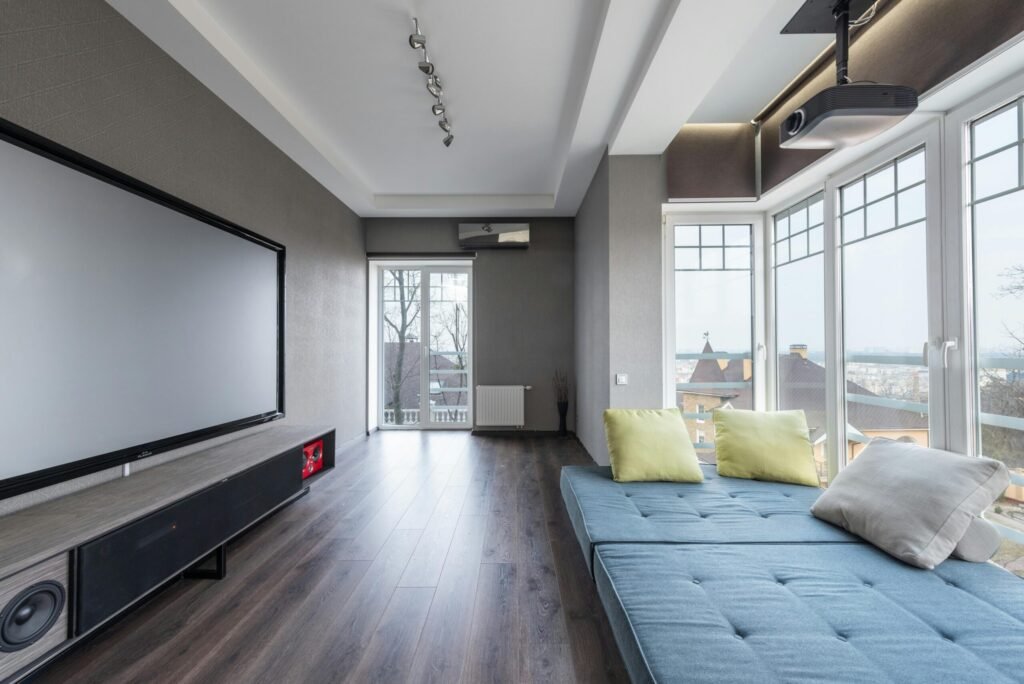
Tiered Seating & Riser Construction
For rooms with more than one row of seating, a riser platform is framed and finished to improve sightlines from the back row. Riser height is planned around your basement’s existing ceiling clearance.
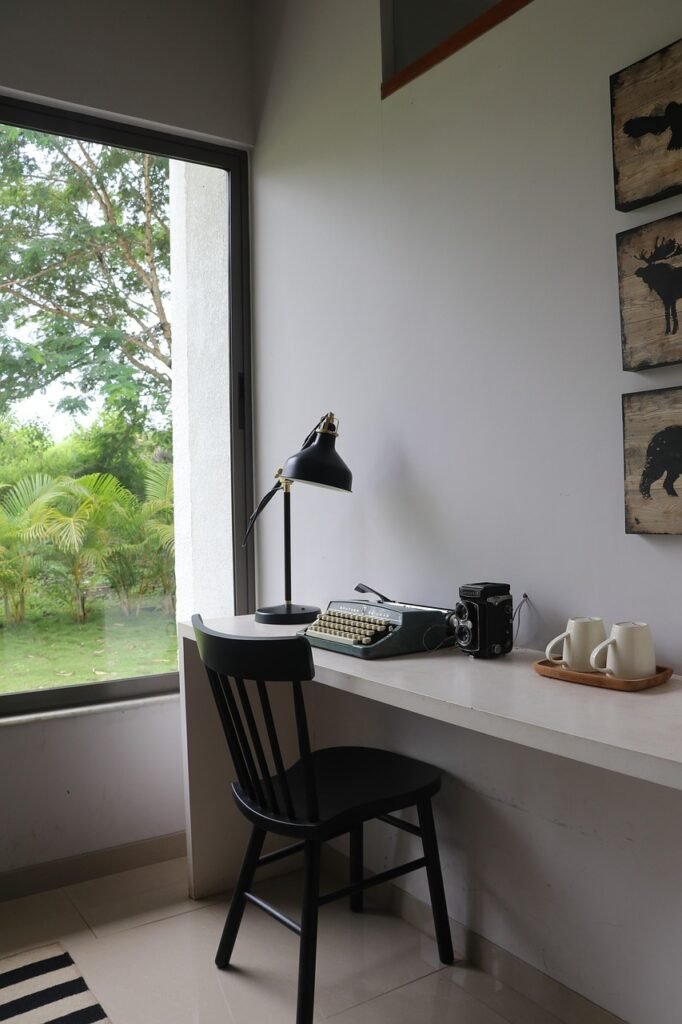
Acoustic Wall Treatments & Blackout Finishing
Acoustic panels, heavier drapery, or other wall treatments are added to manage sound reflection and light control. Blackout solutions for any basement windows are included where applicable.
The Basement Home Theater Finishing Process
1. Theater Assessment
We evaluate room size, ceiling height, existing structural obstructions, and electrical capacity, along with your equipment and seating goals.
2. Layout and Design Planning
We plan screen placement, seating position, wiring routes, and lighting control based on how you'll use the room.
3. Framing and Soundproofing
Walls are framed with sound-dampening insulation, and any riser platform is built to the planned height.
4. Electrical and Low-Voltage Wiring
Outlets, dimmable lighting circuits, and speaker and equipment wiring are installed before drywall goes up.
5. Drywall, Flooring, and Acoustic Finishes
Drywall, paint, flooring, acoustic panels, and screen or TV mounting are completed to finish the room.
6. Final Inspection and Walkthrough
We do a final check of all wiring and finishes, test equipment connections, and walk through the room with you.
Media room, home theater, or dedicated theater?
Three genuinely different projects, not three price points for one. The calculator prices isolation and acoustic treatment as the separate problems they are, and shows how much of the total is what you cannot see.
Start Your Basement Home Theater Finishing in West Valley City Today!
Let’s chat about your ideas! Getting started is easy – simply reach out with details about your basement remodeling project!
Basement Finishing in West Valley City — What Homeowners Should Know
West Valley City is Utah’s second-largest city, and its housing stock reflects decades of steady growth — which matters when planning a basement home theater.
- Population: approximately 138,000–140,000 residents (2024 Census estimates)
- Land area: 35.8 square miles, with a density of roughly 3,900 people per square mile
- Housing units: around 42,700 citywide, with roughly 70% owner-occupied
- Median home construction year: approximately 1985, meaning a large share of local basements were built decades ago under older construction standards
- Median home value: roughly $438,900 (2024 estimate)
- Climate: cold winters with regular snowfall, and hot, dry summers typical of the Salt Lake Valley
Why this matters for a theater project: Homes built in the 1980s and earlier often have lower basement ceiling heights, which is one of the first things we check when a homeowner wants tiered seating or a riser platform.
The Salt Lake Valley also experiences winter temperature inversions, and NOAA research has found that wintertime PM2.5 levels here exceed national air quality standards an average of about 18 days per year, mostly in December and January. A basement theater is a natural fit during these stretches, since it’s a fully indoor space that doesn’t rely on outdoor air quality.
How Much Does Basement Home Theater Finishing Cost in West Valley City?
Basement home theater costs vary based on room size, soundproofing scope, and AV equipment level. Below are typical broad ranges for planning purposes.
| Basement Home Theater Project | Typical Cost Range | Factors Affecting Price |
|---|---|---|
| Basic basement media room | $15,000 – $25,000 | Standard framing, TV setup, basic lighting |
| Mid-range home theater | $25,000 – $45,000 | Projector and screen, soundproofing, dimmable lighting |
| High-end home theater | $45,000 – $80,000+ | Tiered seating, acoustic treatment, premium AV integration |
These figures are broad planning ranges, not quotes, and do not include AV equipment purchased separately by the homeowner in some cases. Your actual cost depends on room size, soundproofing needs, and the equipment level you choose.
Factors That Affect Basement Home Theater Cost
- Room size and shape
- Soundproofing and insulation scope
- Riser and tiered seating construction
- Low-voltage wiring complexity
- Projector/screen versus TV setup
- Lighting control and dimming circuits
- Acoustic wall treatments
- Seating selection
- Flooring material
- Overall design complexity
West Valley City Factors That Can Affect Cost
Ceiling height varies by home and affects whether a tiered riser is realistic without feeling cramped. Existing ductwork and support posts also differ from basement to basement and can affect ideal screen placement.
Every basement is different, so these factors are evaluated individually during your estimate.
Why a Detailed Estimate Matters
An accurate estimate depends on measuring the room, assessing ceiling height and structural obstructions, and understanding your equipment and seating goals. This is how unexpected costs are avoided once construction begins.
Basement Home Theater Layout Options
Dedicated Home Theater Room
A fully enclosed room built specifically for movie watching, with controlled lighting, soundproofing, and a projector or large-format screen. Works best in basements with a separate, closed-off space available.
Basement Media Room
A more casual, multi-purpose room for TV, gaming, and streaming that doesn’t require full theater-level lighting control or soundproofing. A flexible option for basements without a fully enclosed room to dedicate.
Tiered Seating Home Theater
A theater with two or more rows of seating on a riser platform, similar to a small commercial theater layout. Requires enough ceiling height and floor space to accommodate the riser.
Basement Home Theater With Snack Bar
A theater paired with a nearby snack or beverage station, often positioned along one wall near existing plumbing or a simple counter setup. This layout depends on available space adjacent to the theater room.
Basement Home Theater Within a Larger Remodel
A theater built as one component of a full basement remodel, planned alongside a bedroom, bathroom, or living area rather than as a standalone room.
Why Choose Us for Your Basement Home Theater
Local Knowledge. We work with basements across West Valley City and the surrounding Salt Lake Valley communities, including West Jordan, South Jordan, Taylorsville, Kearns, Murray, South Salt Lake, Millcreek, Sandy, Draper, Herriman, Riverton, Midvale, Holladay, Cottonwood Heights, Bountiful, North Salt Lake, and Magna. We understand the range of ceiling heights and layouts common to this region.
Thoughtful Planning. Every theater project starts with an honest assessment of your space, including whether tiered seating or a riser is realistic for your ceiling height.
Quality Construction Practices. From soundproofing to wiring to final finishes, we follow sound construction practices at every stage.
Clear Communication. You’ll know what’s happening at each stage of the project, with straightforward answers to your questions.
Homeowner-Focused Service. Our estimates and recommendations are based on your basement and your goals — not upselling unnecessary work.
Need Help?
Frequently Asked Questions About Basement Home Theater Finishing in West Valley City
Below are some of the most common questions Our Network get from families about Basement Remodeling. If you have any other questions contact us!
How much does a basement home theater cost in West Valley City?
Most basement home theaters range from $25,000 to $45,000 for a projector-based setup with soundproofing. A basic media room can run $15,000–$25,000, while tiered seating and premium AV integration push costs to $45,000–$80,000+.
How long does it take to finish a basement home theater?
A basic media room typically takes 4–6 weeks. A full home theater with soundproofing, wiring, and a riser platform usually takes 8–12 weeks.
Do I need a projector, or is a TV better for a basement theater?
It depends on room size and lighting control. Projectors typically work best in rooms with strong light control and screens 100 inches or larger, while large-format TVs (75–98 inches) work well in media rooms with more ambient light.
How much soundproofing does a basement theater need?
Most theaters use sound-dampening insulation in the walls and ceiling, which is sufficient for typical home use. Homes with a bedroom directly above the theater sometimes add resilient channel or double-layer drywall for extra sound isolation.
How many people can a basement home theater seat?
Most basement theaters comfortably seat 4–8 people in a single row, or 8–12 with a two-row tiered layout, depending on room size. We measure your space during the assessment to determine what fits.
Does a basement home theater need its own electrical circuit?
In most cases, yes, a dedicated circuit is recommended for AV equipment to avoid overloading shared circuits and to support consistent power for sensitive electronics.
Contact Basement Finishing West Valley City Today!
If you’re planning a basement home theater in West Valley City — whether it’s a simple media room or a full tiered-seating theater — we’re happy to walk through your options.
Every project starts with a free, no-pressure estimate based on your basement’s actual condition and your goals for the space. We serve West Valley City and the surrounding Salt Lake Valley communities.